| Southern Albania Journey – A Tapestry of History, Nature & Traditions

Hiking in the Albanian Alps—also known as the Accursed Mountains—is a journey into a land of untamed beauty, deep traditions, and heartfelt hospitality. Here, dramatic peaks rise above pristine valleys, ancient trails wind through wild landscapes, and time‑honored ways of life remain beautifully intact. The Valbona Valley, often called the Gem of the Albanian Alps, captivates with its sweeping alpine vistas. Towering mountain peaks, dense forests, and crystal‑clear rivers create a setting of remarkable natural harmony. A network of trails leads through some of the region’s most iconic routes, including Valbona Pass, Rragam Village, and the slopes beneath Mount Jezerca, Albania’s highest peak. Along the way, hikers may encounter vibrant wildflowers, soaring eagles, and, in these remote highlands, traces of elusive wildlife such as brown bears. Traditional villages and homemade Albanian cuisine offer a warm and authentic cultural encounter at the end of each day. Further along the journey, Theth reveals itself as a place of quiet magic. This historic mountain village, with its stone houses and timeless atmosphere, is surrounded by awe‑inspiring landscapes. Cultural landmarks such as the Church of Theth and the Lock‑In Tower stand alongside natural wonders like the Grunas Waterfall. Trails from Theth connect to the renowned Peaks of the Balkans route, including the classic Theth–Valbona hike, celebrated for its panoramic views. Hidden canyons, cascading waterfalls, and the luminous turquoise waters of the Blue Eye of Theth complete this unforgettable alpine experience. This journey through the Albanian Alps offers more than a hike—it is an immersion into a landscape where nature and culture exist in rare balance, leaving lasting impressions long after the trail ends.

Highlights

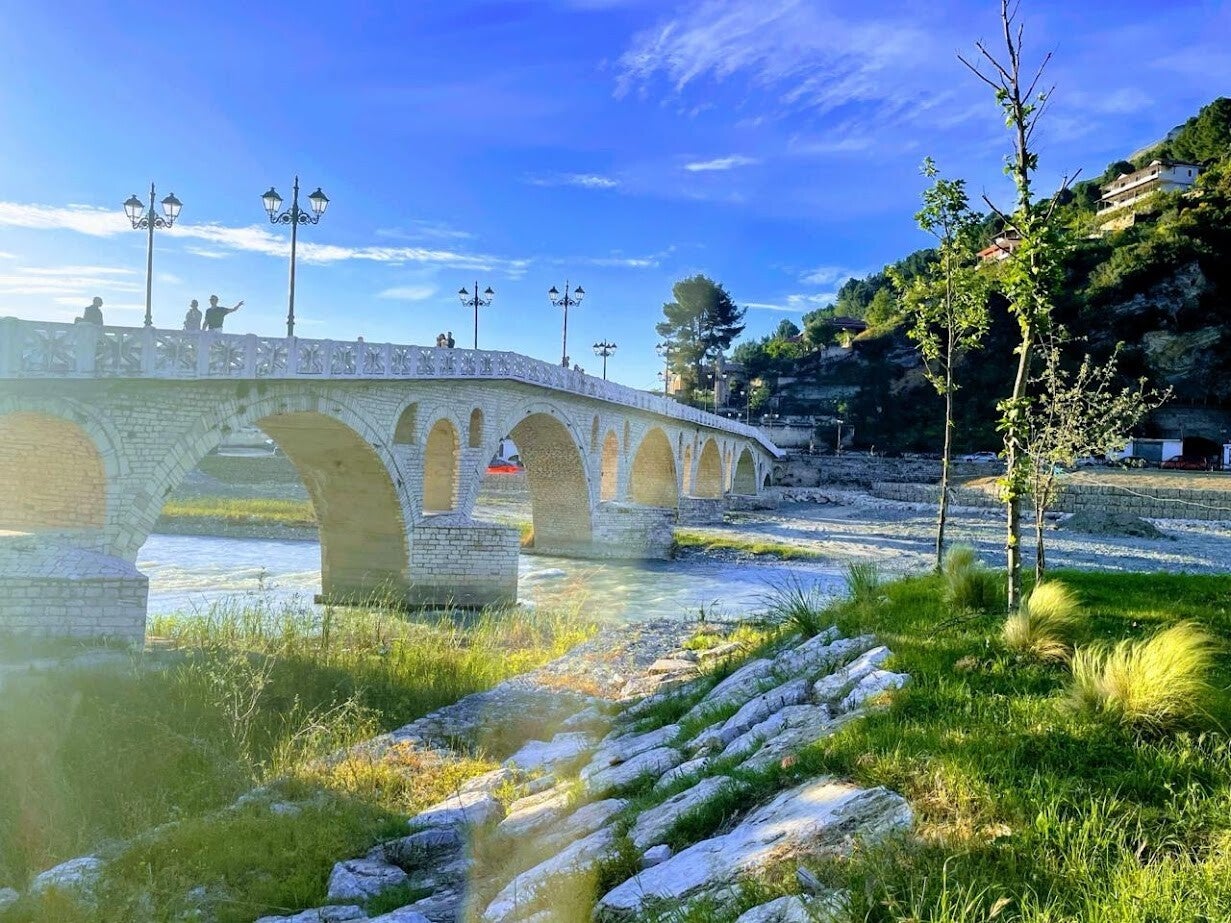
Berat, the Castle,  historic neighborhoods, Medieval Art Musem in Berat ( UNESCO World Heritage Site) , Medieval Musem in Berat,  Bridge of Gorica, Apollonia arceological site and the Church of Saint Mary, Llogara National Park, Ali Pasha Castle and the U Boat Bunkers, driving along the Albanian Riviera of the Ionian Coast,  Archeological City of Butrint ( UNESCO World Heritage Site)  , Ksamil Beach, Blue Eye Carstic Springs, Gjirokastra Castle and Bazar ( UNESCO World Heritage Site) , Driving along Vjosa River ( the Blue Heart of Europe ) , Germenji National Park, Old Bazar of Korca, St Naum Monastery, Ohrid Lake, City of Ohrid,  Shkumbini Valley, Elbasan Castle with the Old Mosque and the medieval Church, Tirana Scanderbeg Square Main Boulevard, Old Amphiteater of Durres, Kruja Fortress and Kruja Medieval Bazar.

Itinerary daily

Day 1 – Arrival in Tirana · Journey to Berat ( UNESCO World Heritage )

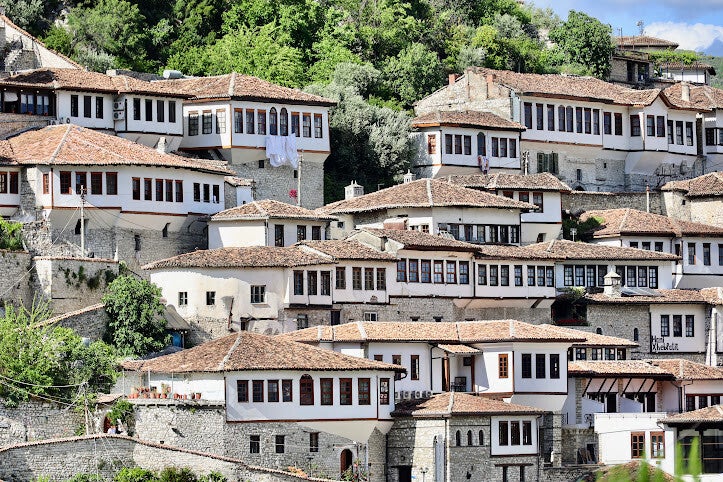
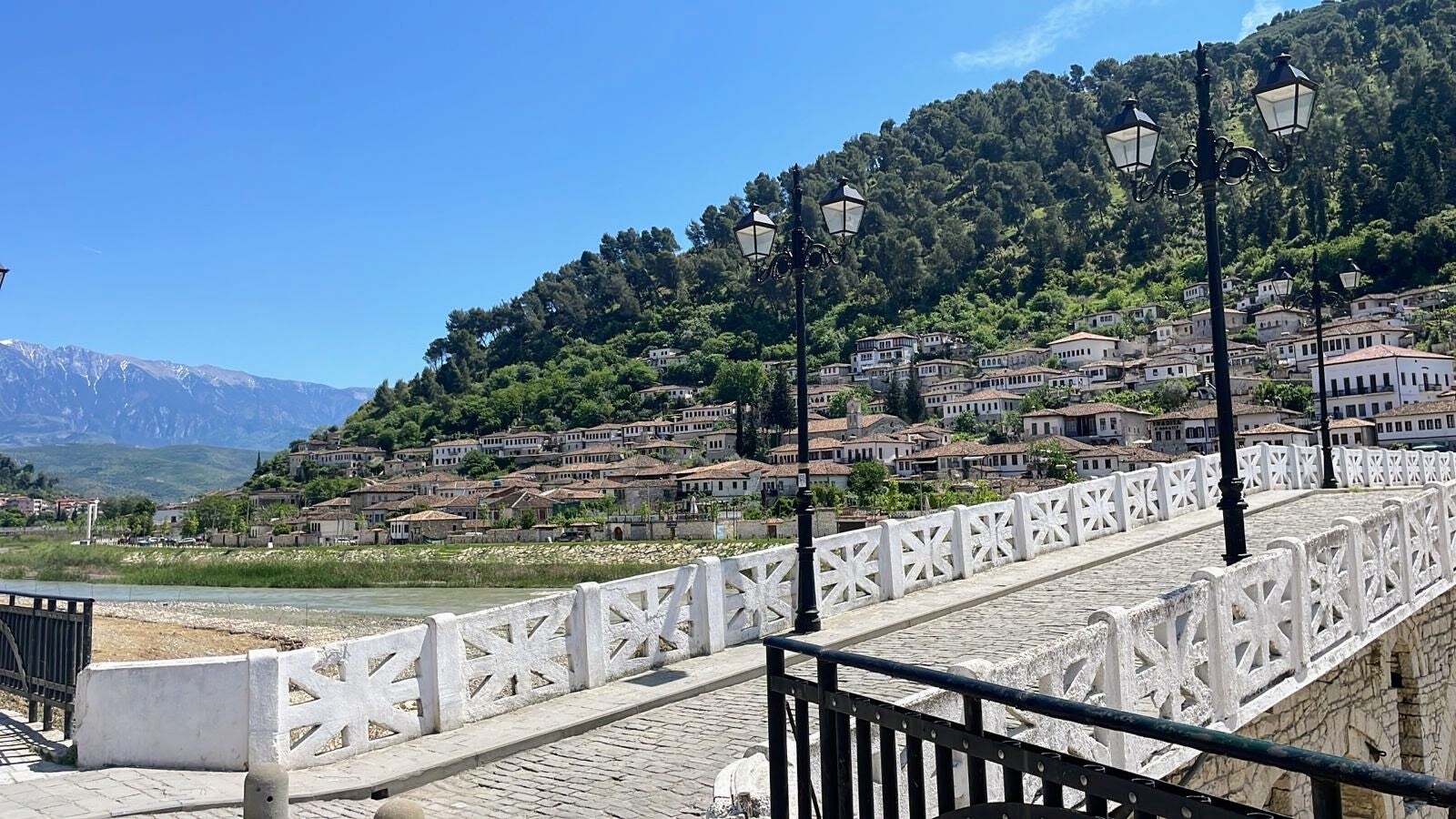
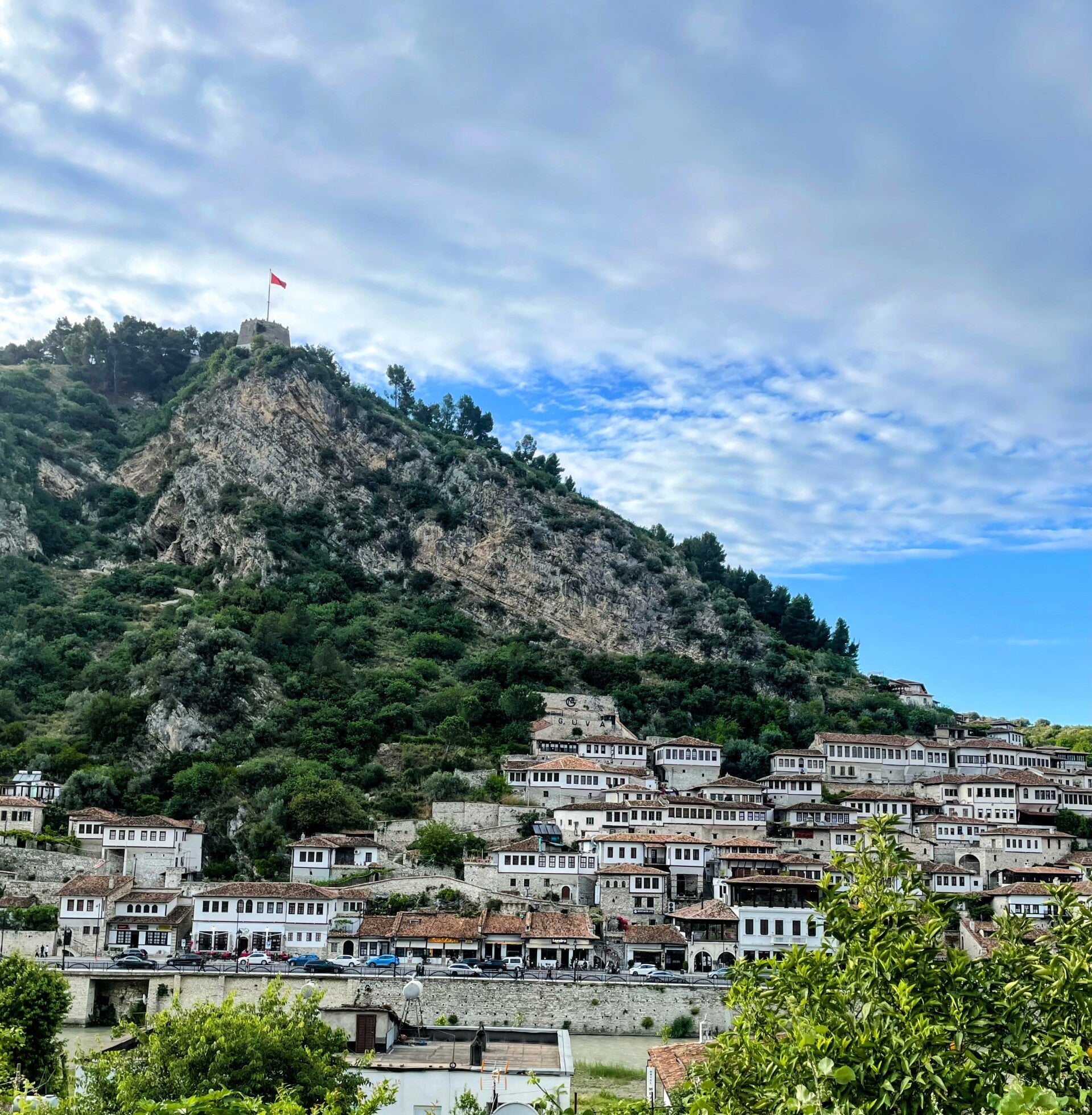
Your journey begins in Tirana, where the group gathers and the spirit of discovery awakens. From the capital, we travel south to Berat, a city shaped by 2,400 years of history and light, known as the City of a Thousand Windows. A UNESCO World Heritage treasure, Berat welcomes us with its white stone houses cascading beneath the ancient castle. After settling into our hotel, we wander through its historic quarters, and as evening falls, we raise a glass of local wine beneath the quiet majesty of the castle walls.

Day 2 – From Berat to Saranda · Through Time and the Riviera

After breakfast, we ascend to Berat Castle, one of the rare fortresses in Europe still inhabited today. Inside its walls, centuries unfold—stone houses, churches, and the Onufri Iconographic Museum, were sacred art glows with medieval color and devotion.

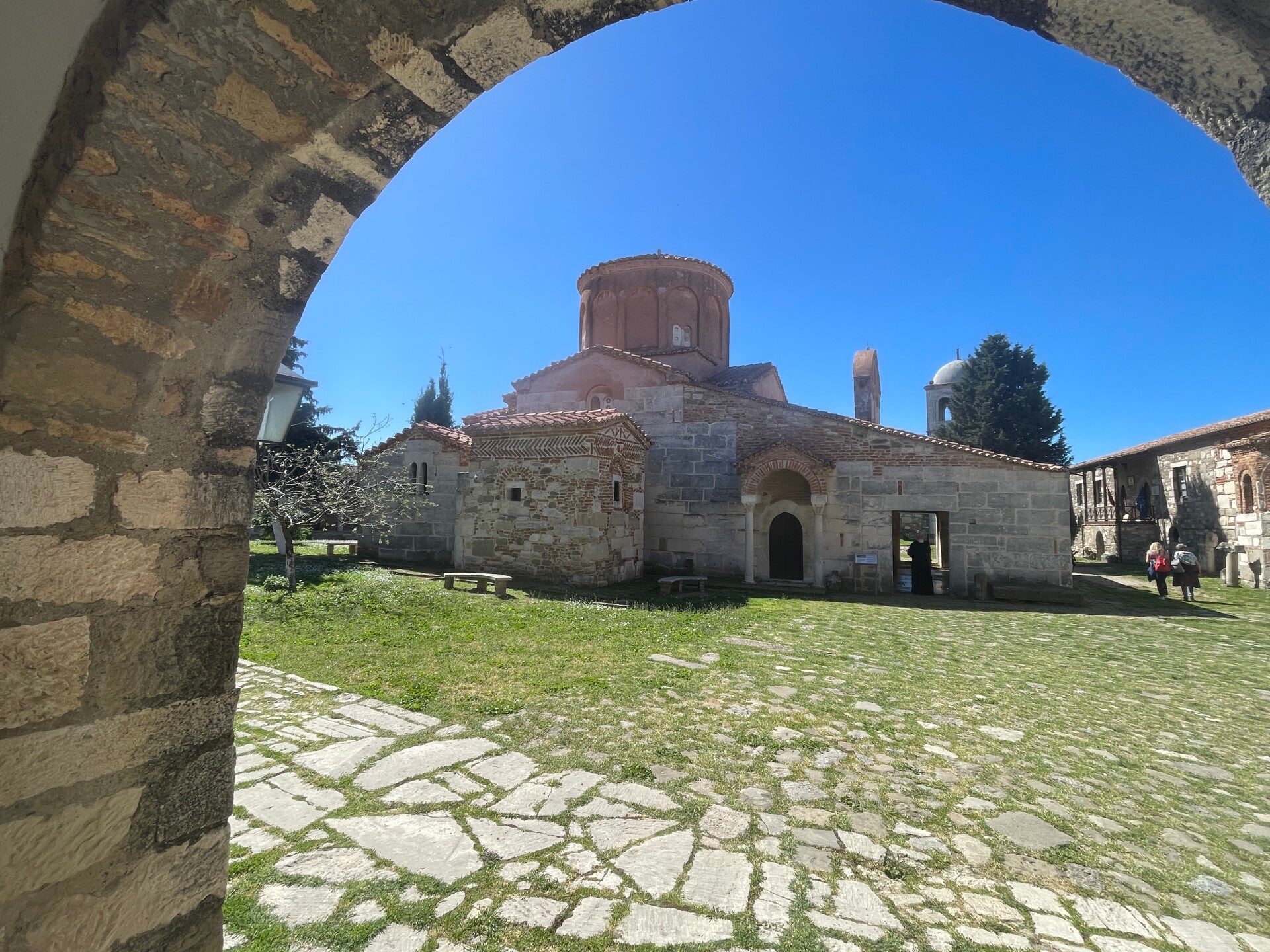
Leaving Berat behind, we travel to Apollonia, where Illyrians, Greeks, Romans, and Byzantines once crossed paths. Among ancient columns and olive trees, history breathes softly.
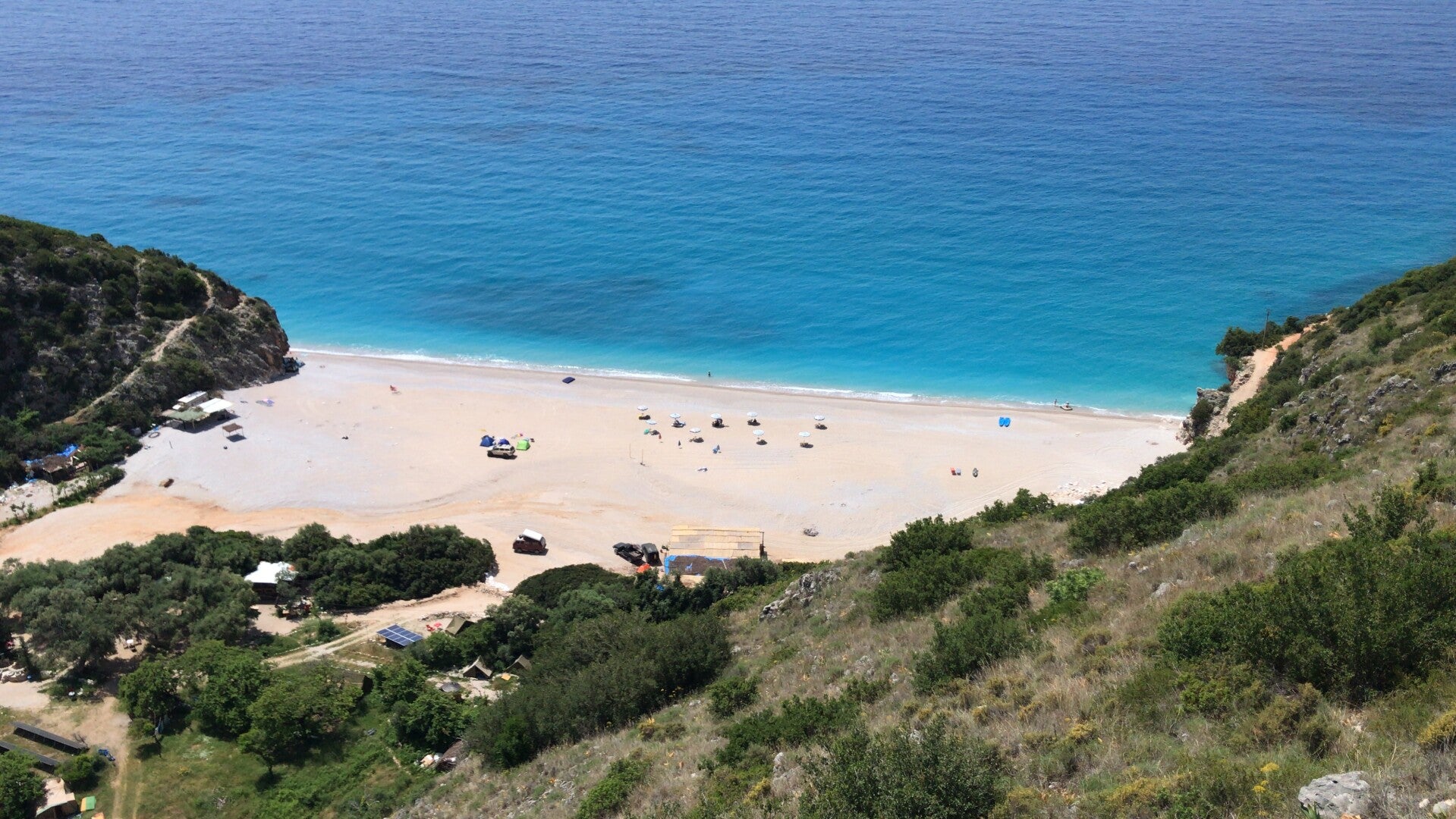
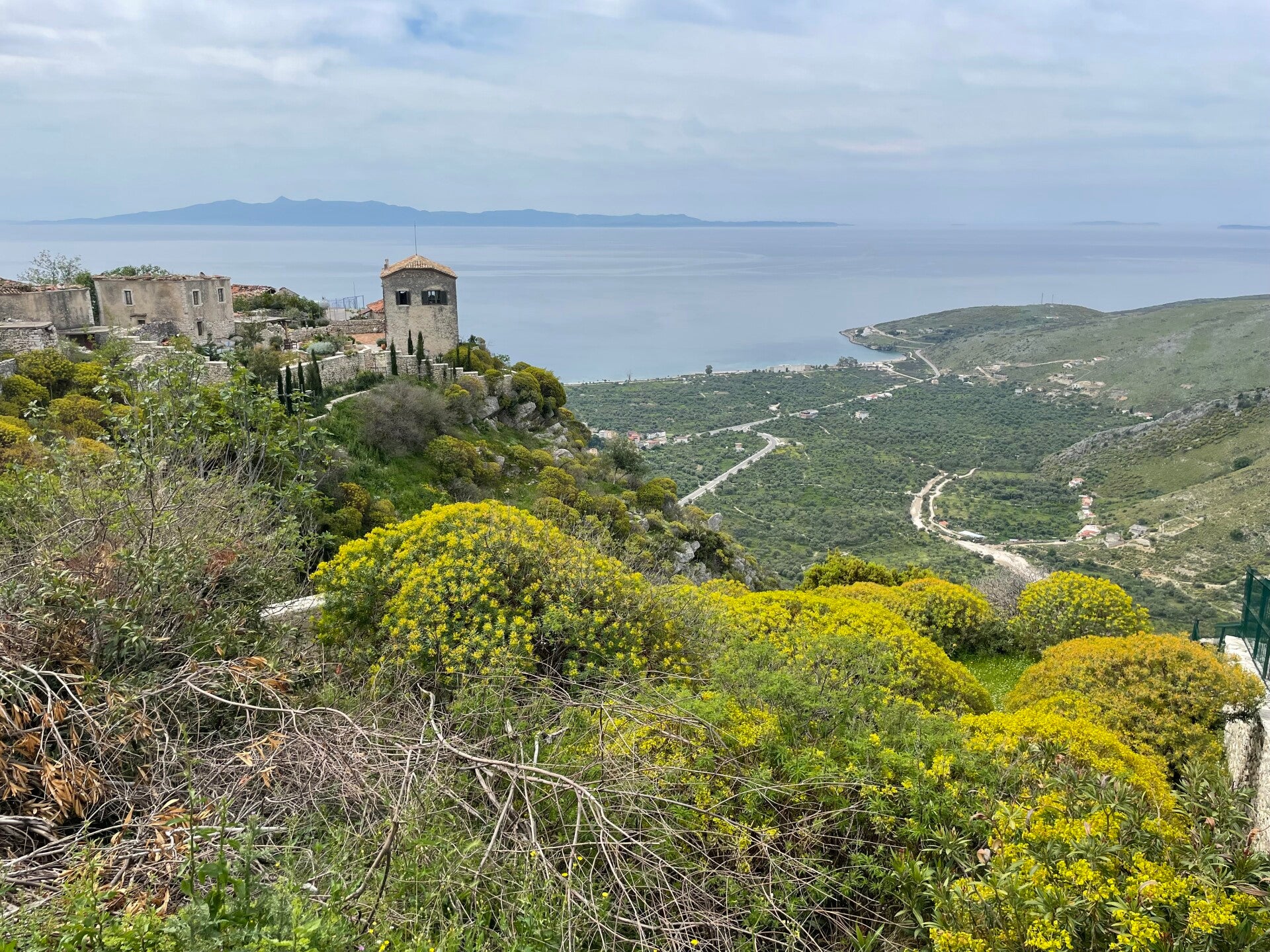
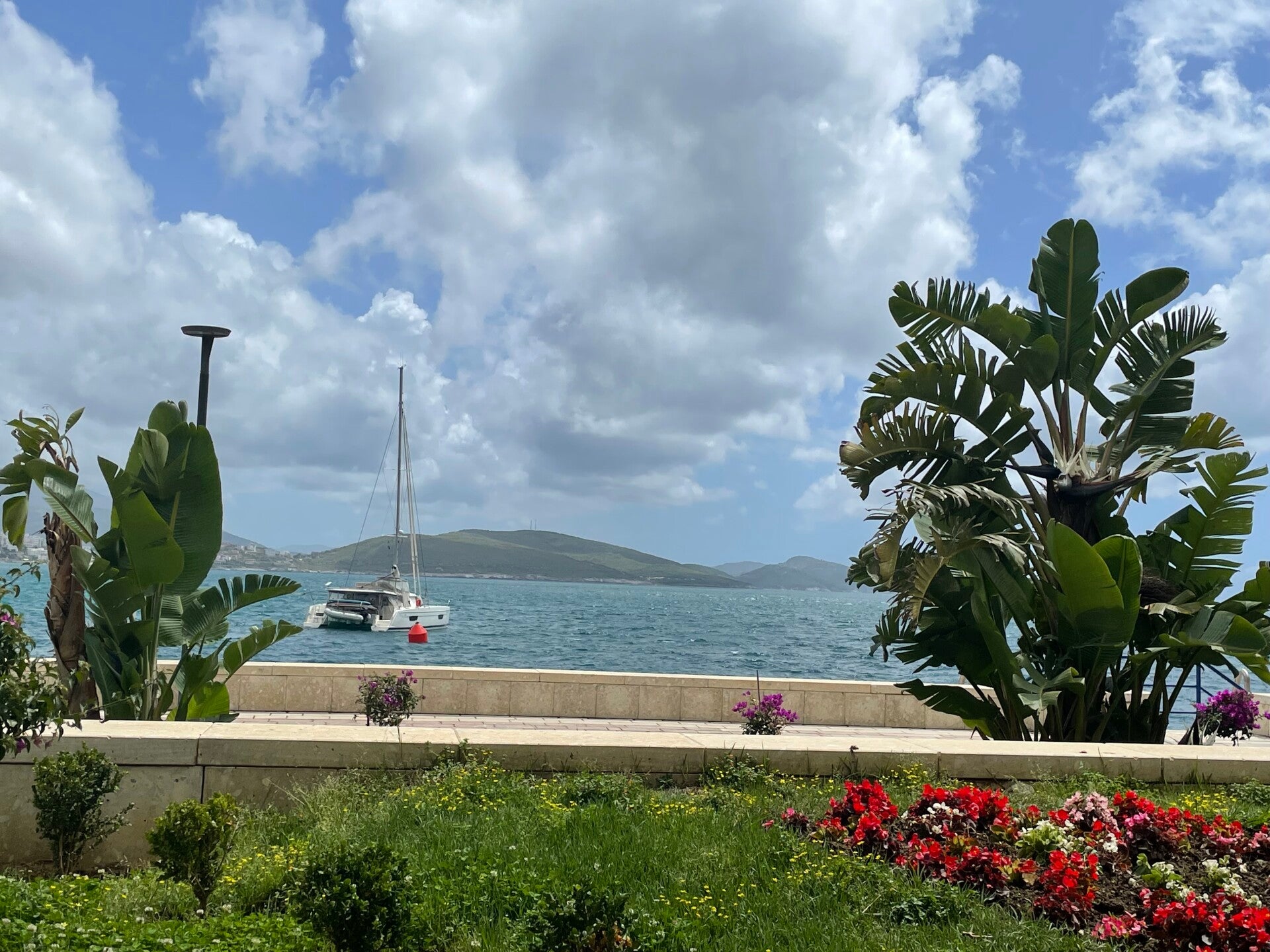
Our journey continues to Vlora, where the Adriatic Sea meets the promenade, before climbing the Llogara Pass at 1,100 meters. From this natural balcony, the Ionian Sea stretches endlessly below, Corfu shimmering on the horizon. Descending along the Riviera through olive groves and coastal villages, we pause at the elegant Porto Palermo Castle, before arriving in the lively seaside town of Saranda.

Day 3 – Butrint · Blue Eye · Gjirokastra

The morning leads us to Butrint, one of Albania’s most precious UNESCO World Heritage Sites. Nestled between lagoon and sea, this ancient city tells stories of empires long gone, wrapped in lush Mediterranean nature.

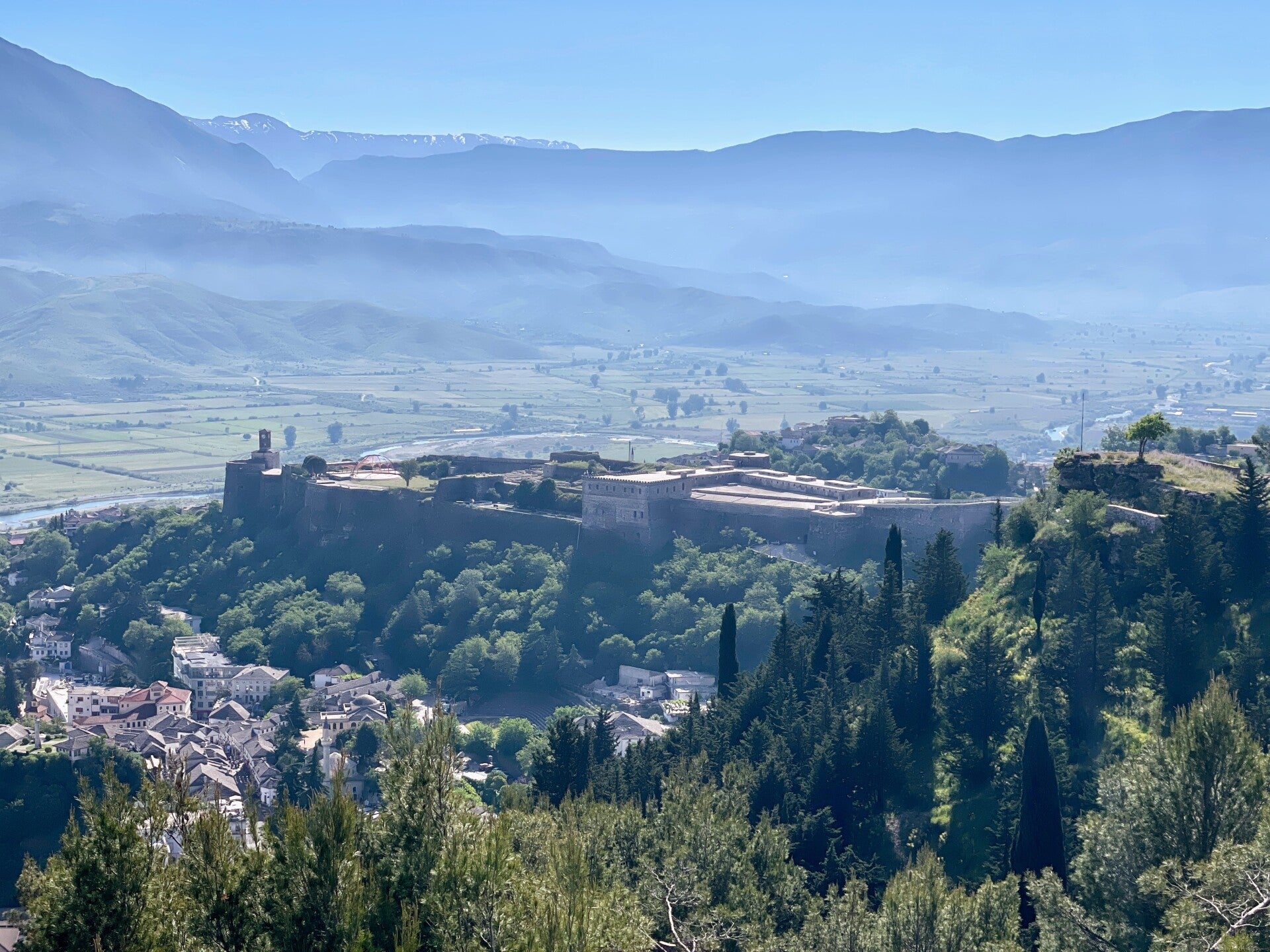
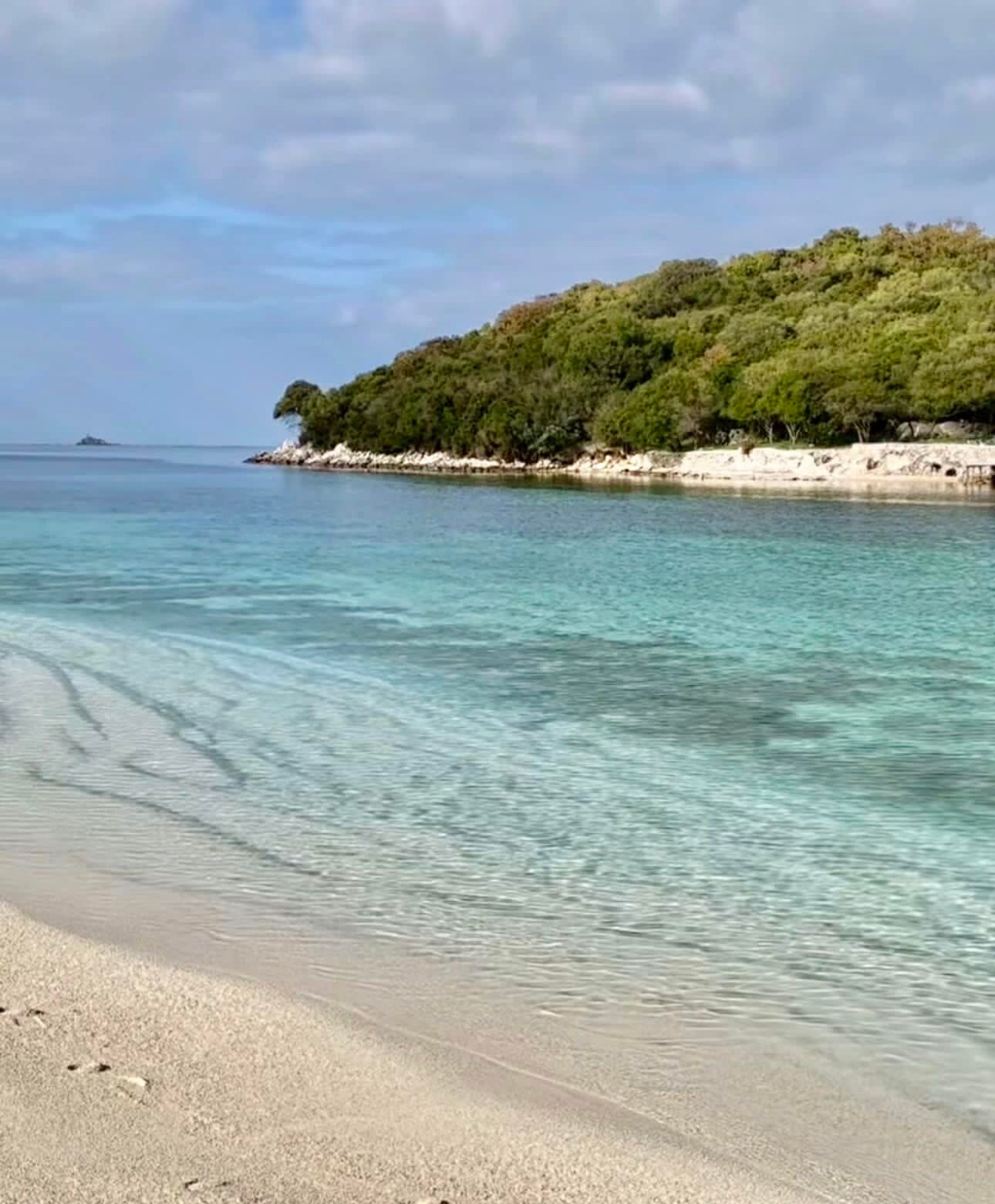
We continue to the white sands of Ksamil, then journey inland to the magical Blue Eye Spring, where crystal-clear water rises from the depths in hypnotic shades of blue. By afternoon, we reach Gjirokastra, the legendary stone city. From its imposing castle, views stretch across the Drino Valley, while the old town invites us to wander its cobbled streets. Like Berat, Gjirokastra is a UNESCO World Heritage Site, preserved in stone and memory.

Day 4 – Along the Vjosa River to Korça

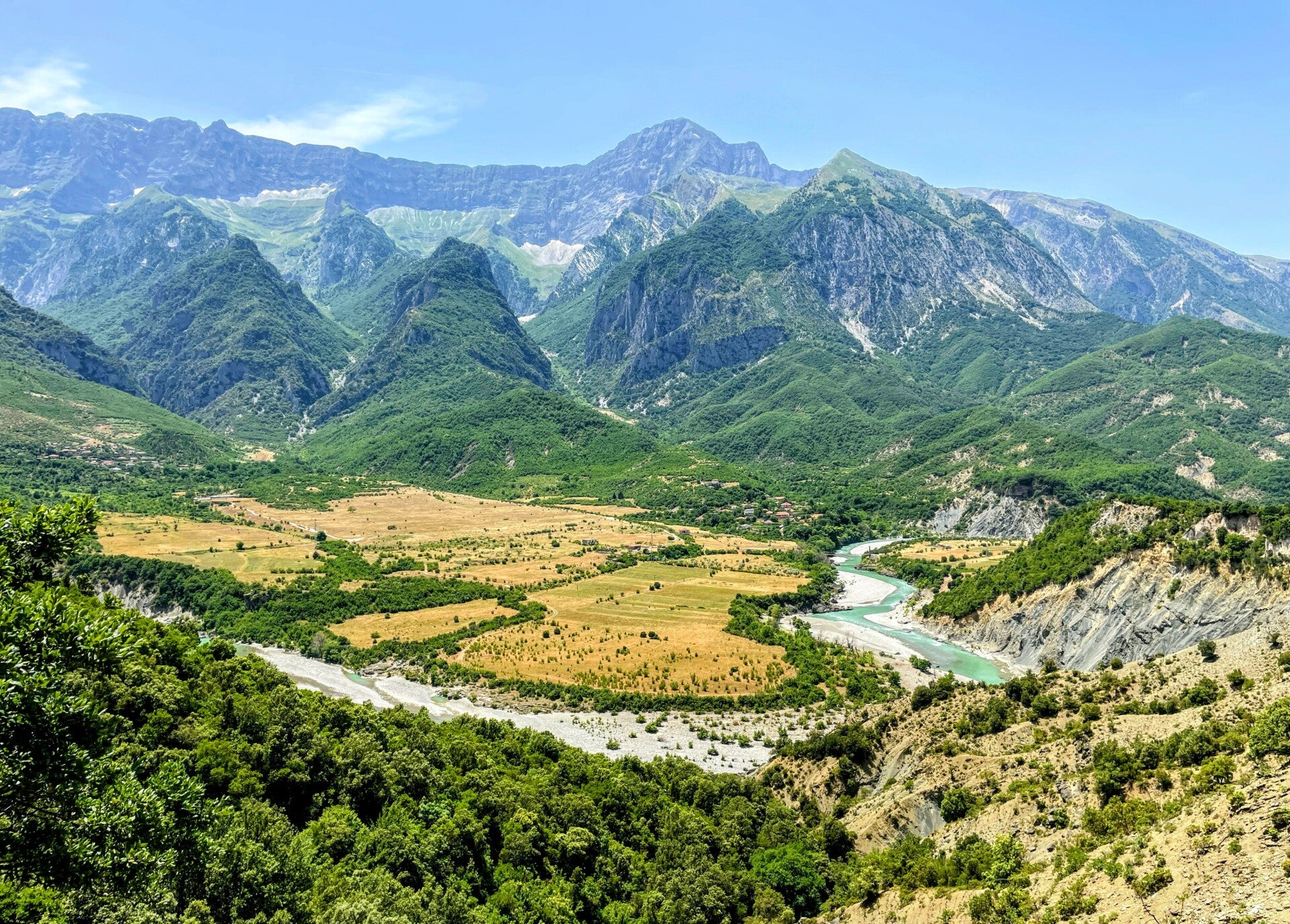
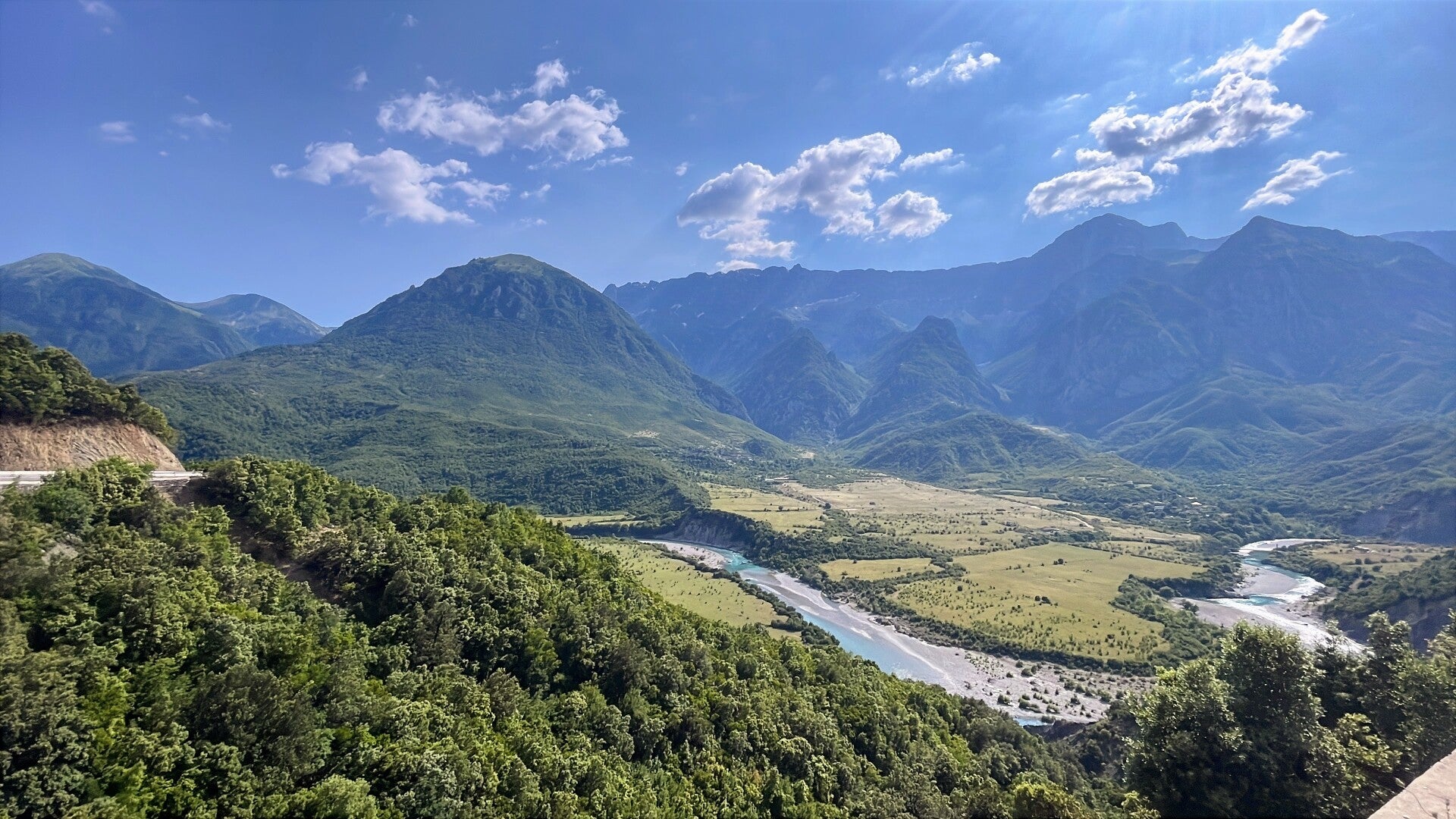
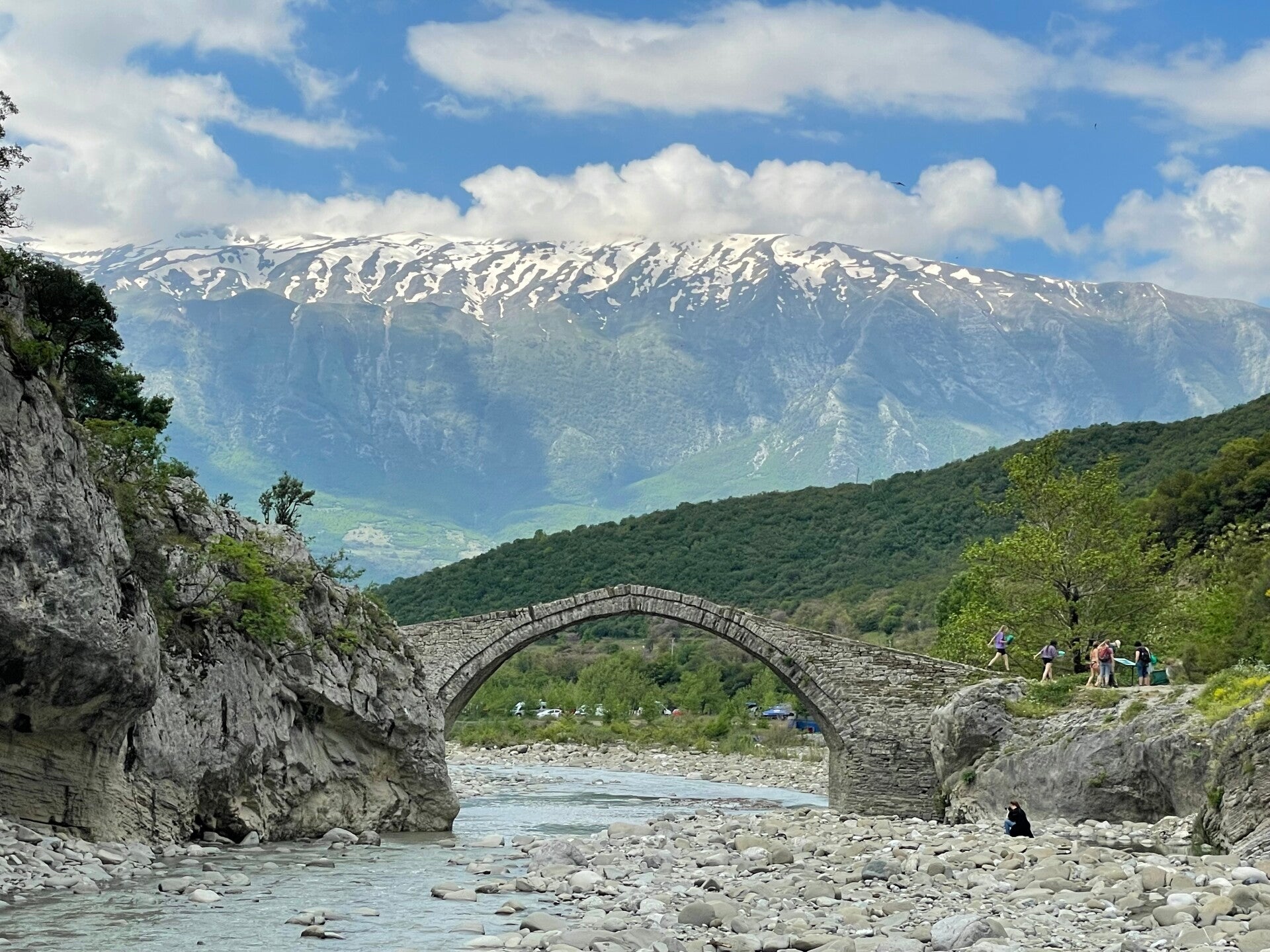
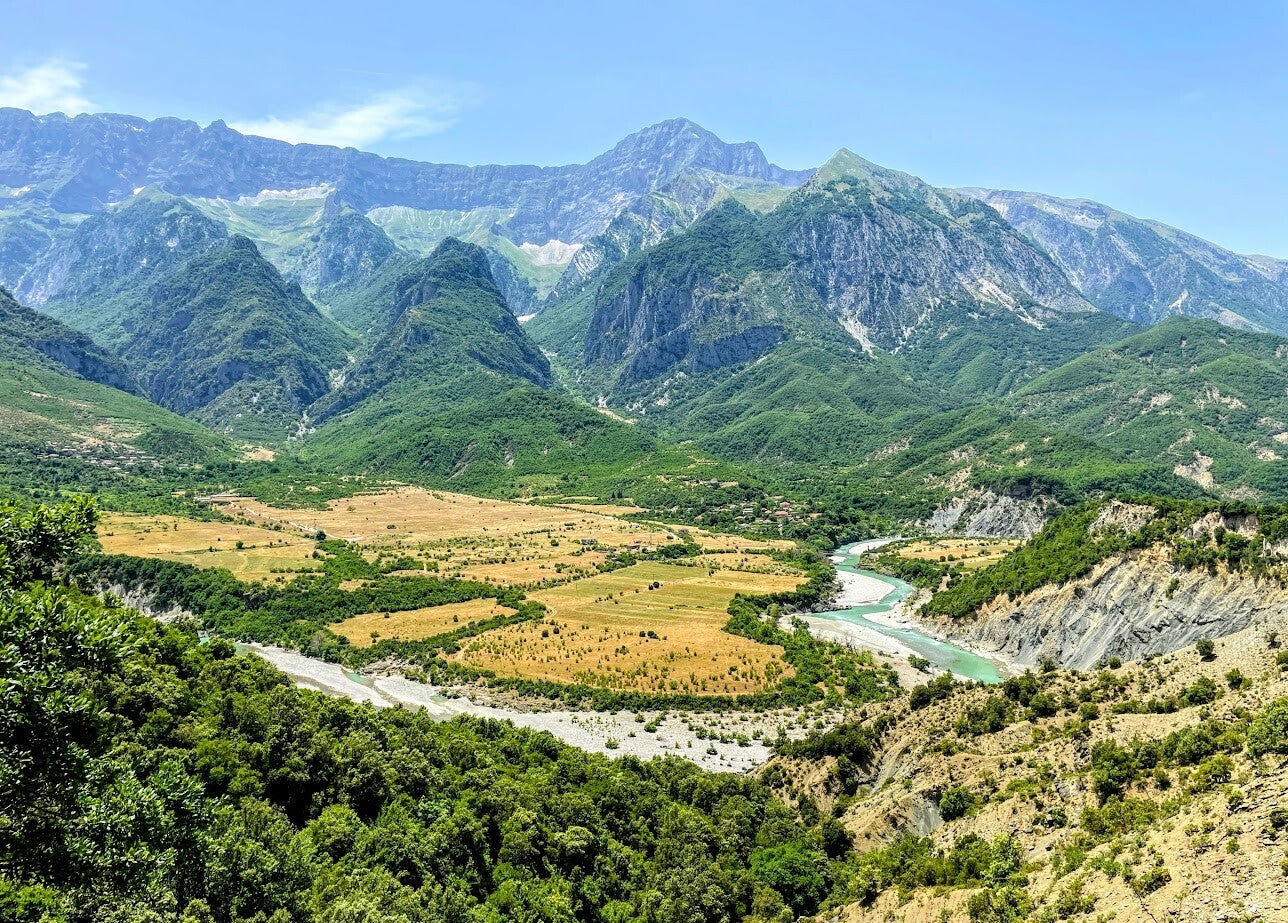
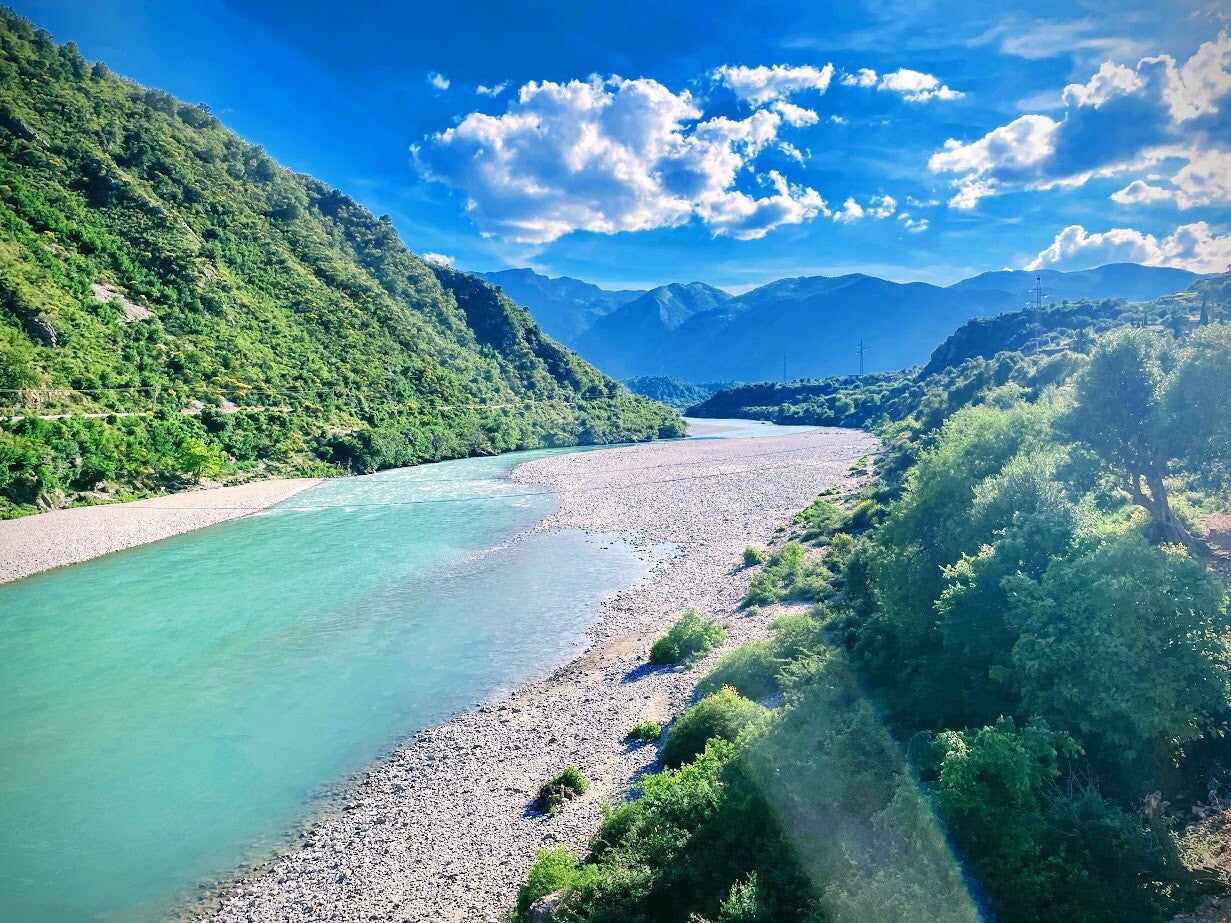
Today we follow the wild course of the Vjosa River, Europe’s last free-flowing river and a symbol of untouched nature. Flowing through deep valleys and fertile plains, the Vjosa reveals the raw heart of southern Albania.

Crossing mountain ranges near the Greek border—Gramoz, Nëmërçka, and the forests of Gërmenj National Park—we arrive in Korça, the city of serenades. The evening unfolds gently in the old bazaar, where flavors, music, and quiet elegance define the atmosphere.

Day 5 – Korça · Saint Naum · Ohrid

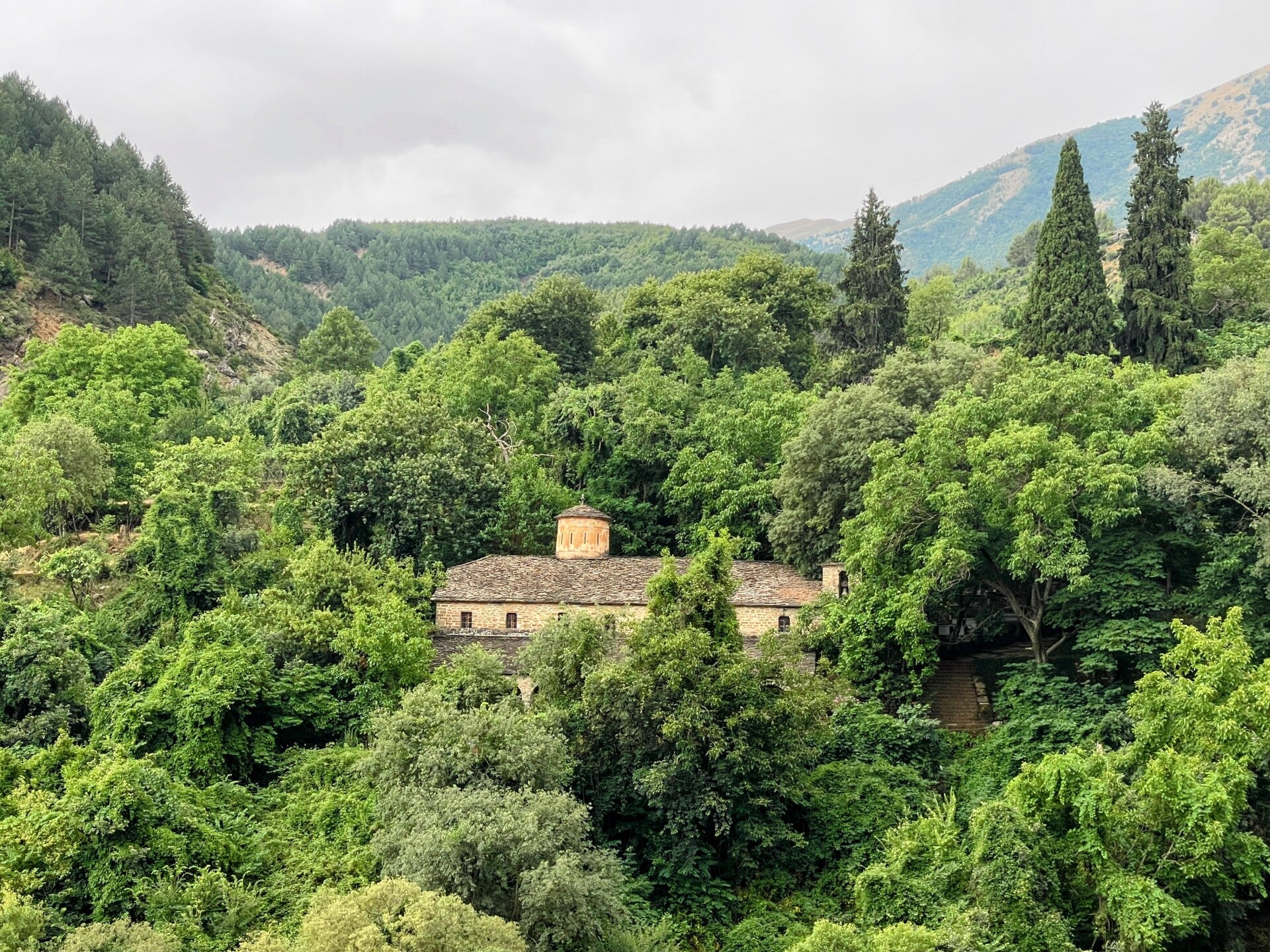
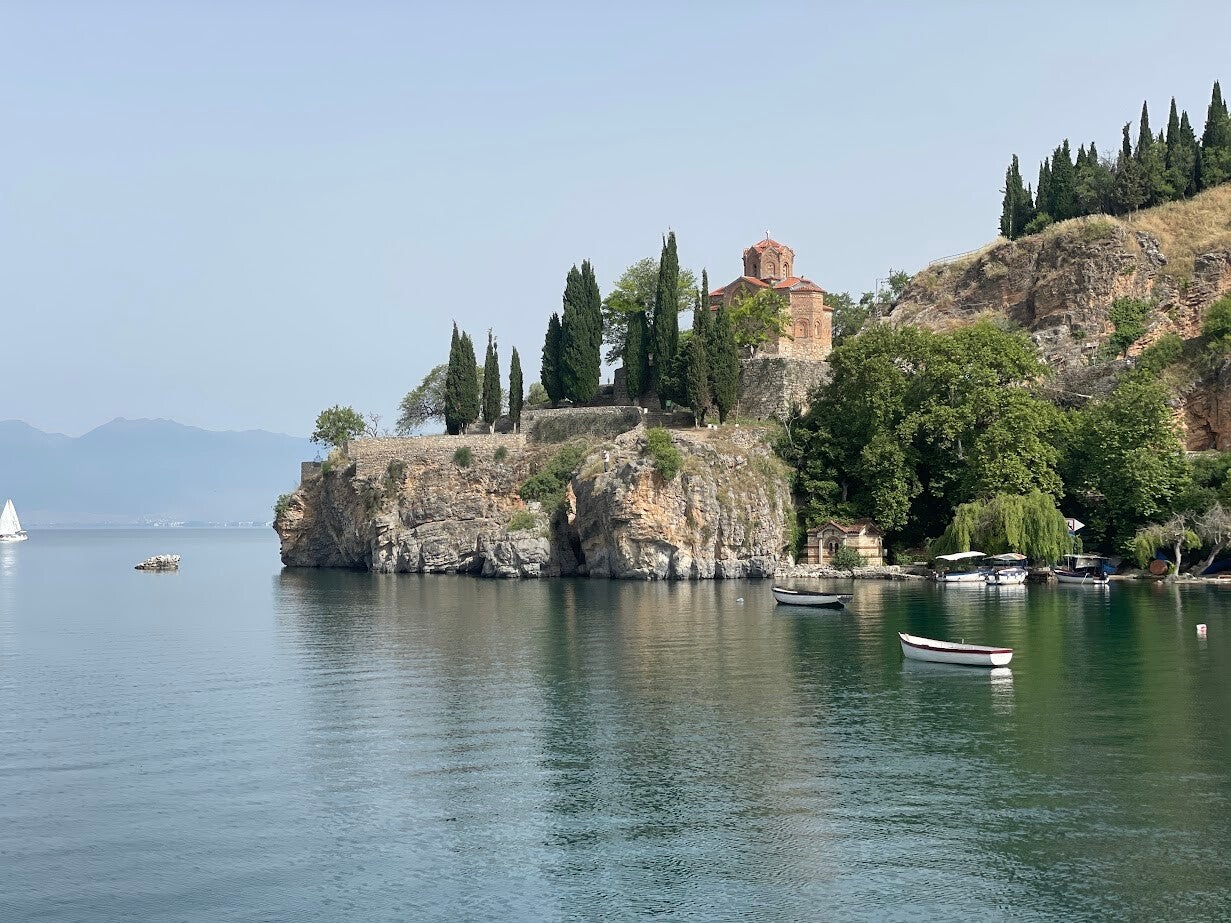
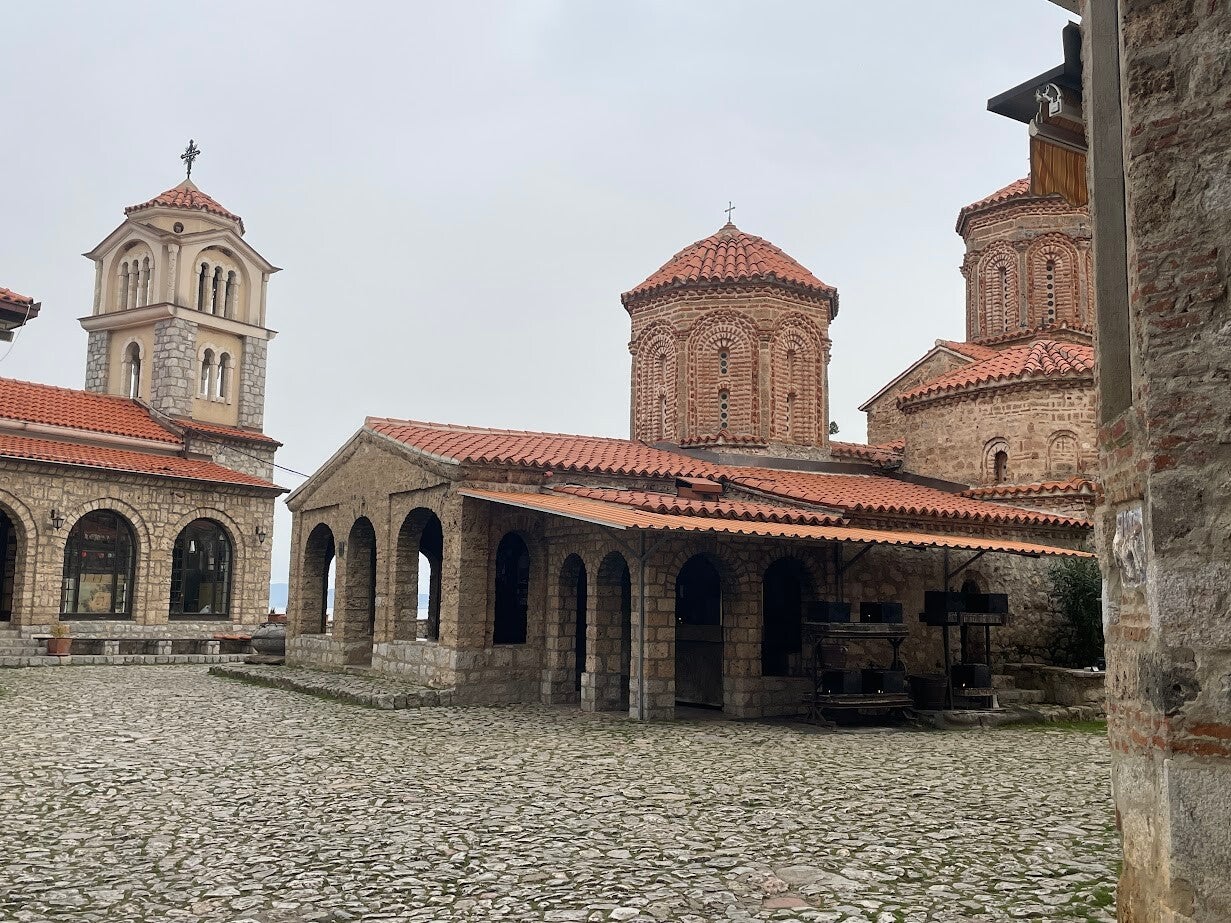
Crossing into North Macedonia, we visit the serene Monastery of Saint Naum, perched above the springs of Lake Ohrid. A place of pilgrimage and peace, it offers silence broken only by water and prayer.

We continue to Ohrid, known as the Jerusalem of the Balkans. A UNESCO World Heritage Site, both city and lake carry millennia of spiritual and cultural history. Strolling its streets and lakeshore, we discover why this place has captivated travelers for centuries.

Day 6 – Ohrid · Elbasan · Tirana bthrough the forrmer Via Egnatia

Our return to Albania follows the Shkumbin River Valley, tracing the path of the ancient Via Egnatia, once linking Rome to Constantinople. In Elbasan, we visit a centuries-old mosque and the Church of Saint Mary—symbols of Albania’s deep-rooted religious harmony.

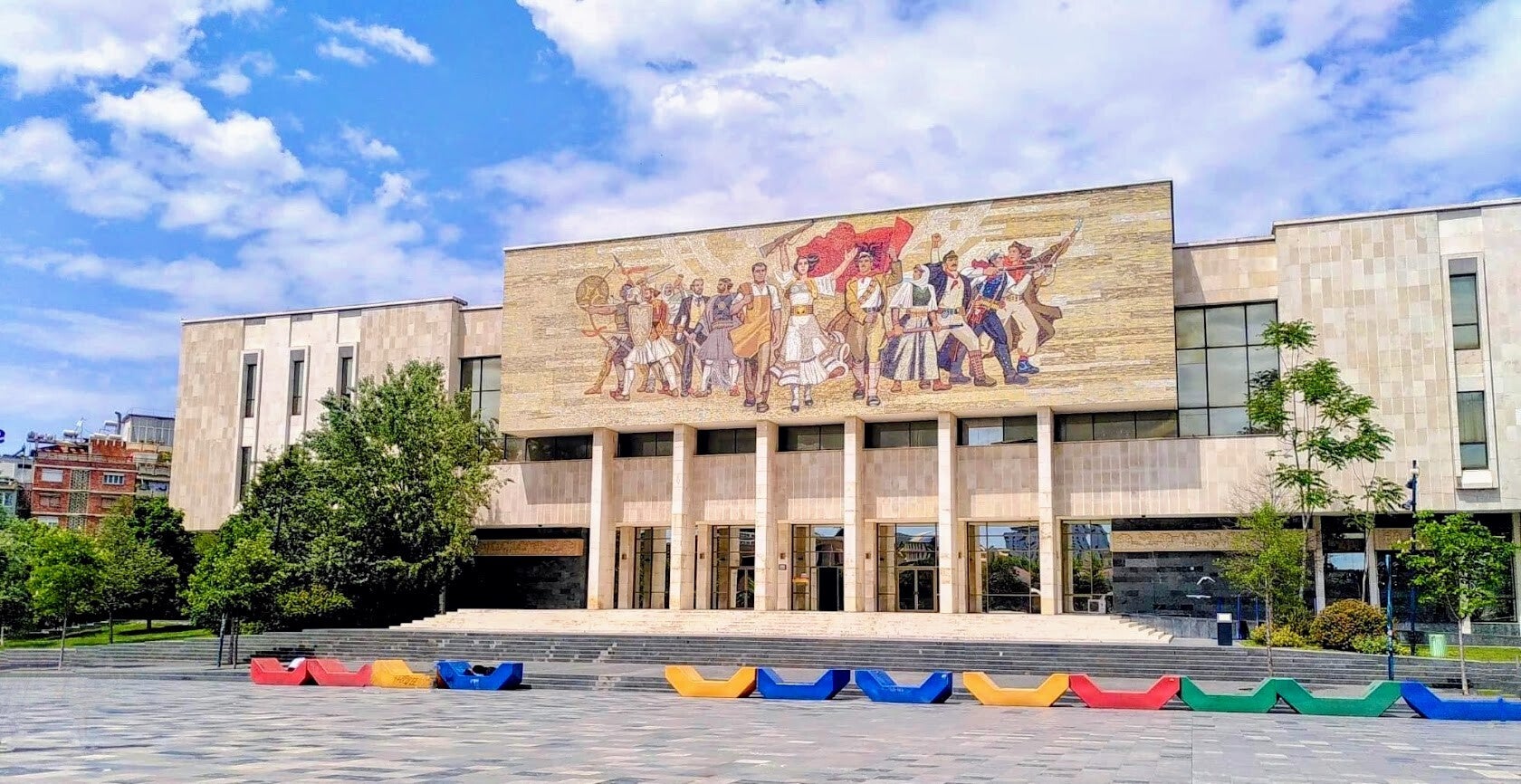
By afternoon, we reach Tirana, Albania’s vibrant capital. A guided city tour reveals layers of history—from Roman and Ottoman traces to Italian architecture and modern life. The day ends in Blloku, once closed to the public, now alive with cafés and culture, where we toast the journey with a glass of wine.

Day 7 from Durres one of the oldest cities in Europe to the historic capital of Abania in Kruja

We travel west to Durres, Albania’s ancient gateway to the Adriatic, where the Roman amphitheater tells stories of a 3,000-year-old past. From the coast, we head inland to Kruja, the historic heart of Albanian resistance. Walking through its medieval bazaar and castle, we honor the legacy of Skanderbeg, Albania’s national hero.
In the evening, we return to Tirana for a farewell dinner featuring traditional Albanian cuisine.

Day 8 – Departure from Tirana

As the journey comes to an end, we say goodbye with hearts full of memories—shared stories, exchanged photos, and the quiet promise to return. Albania lingers long after departure, a land not just visited, but felt.

Transfer to Tirana Airport · 17 km

The package includes: 

8 days Excursion into the Main historical and Landscape Attractions of Albania with an escape in North Macedonia

Guided Tour starting from 4 People

All Necessary transfers and the fully Transport during the Tour

4 UNESCO World Heritage 

7 Nights in commode Hotels , 3+ or 4 *

7 breakfasts, 


What to Expect: 

This three-day hiking adventure combines breathtaking landscapes, authentic countryside life, and cultural discovery. From fjord-like lakes to alpine passes and hidden waterfalls, the Albanian Alps promise an experience that stirs both body and souls, combined with comfortable and authentic accommodations and delicious homemade meals. The main hike from Valbona Valley to Theth Valley typically takes six to seven hours. Previous trekking experience is helpful but not essential for participants who are very fit and comfortable with long hiking days. well, known for the stunning alpine landscapes with dramatic mountain peaks and river valleys such Valbona Pass a legendary mountain pass connecting the two valleys at ~1,860 m, flower-filled meadows, ancient forests, and pristine watercourses visible throughout the hike and Traditional mountain villages and cultural heritage in both Valbona and Theth.

When shall i plan a Tour in South Albania 

Best Time to visit is from April till to the Beginning of November. 

General Information

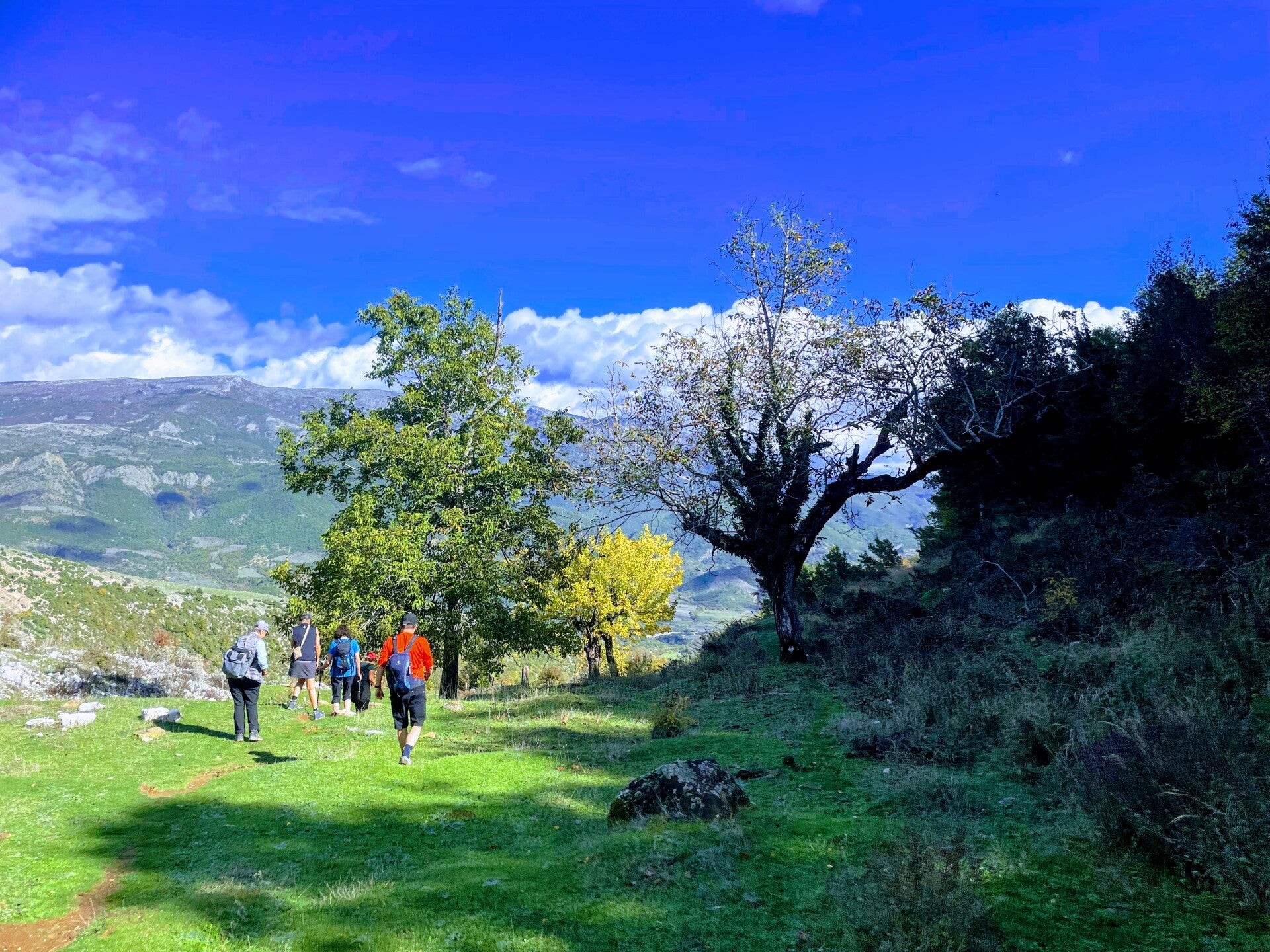
This hiking tour is rated challenging for beginners and moderate for experienced hikers. Participants should be in good physical condition, as the route involves sustained walking across mountainous terrain with significant elevation changes. The trail passes through a diverse and spectacular alpine landscape, featuring steep ascents and descents, deep valleys shaped by mountain rivers, rugged rocky peaks, and stretches of hardy mountain pine forest. Despite the dramatic scenery, the selected routes are generally stable and reliable underfoot, offering a well‑balanced combination of challenge and safety.

Hiking days often include sharp inclines and declines, and weather conditions in the mountains can change rapidly—even during the summer months. Sudden shifts in weather may increase the difficulty of the hike and, in some cases, require route adjustments, particularly in remote areas.

Each participant is required to carry their own daypack during the hike. Main luggage will be transported separately by mule or horse; therefore, luggage must be packed in a soft bag or duffel. Suitcases are not suitable for this terrain

Clothing Sugestion

For an extensive hiking tour we recommend hiking boots, a lightweight jacket and emergency rainwear. Sunglasses, a sun hat, and good pair of walking shoes or sneakers are also advised for sightseeing and exploring in non-hiking days. 
From April to October light clothing that provide comfort are advised. Sunglasses, a sun hat, and good pair of walking shoes or sneakers are recommended for sightseeing. A lightweight jacket and emergency rainwear are also advised. 

Cuisine

Fertile climate, closeness to the sea and history have had an impact on diversity of Albanian cuisine. In Albania, the cuisine varies by region, but basic components of most dishes are meat and vegetables. In the Northern regions grinned corn is very popular and it is used from baking bread to making various types of sweets and salty national dishes. Characteristics of the central part are poultry and fish dishes. The climate favours the growth of almost all vegetables and fruits so delicious desserts and various types of byrek (salty cakes) are a must. The Southern regions are known for growing citrus cultures and olives and also for using plenty of milk and other dairy in traditional dishes. Albania’s national drink is grape brandy “Raki” but also wines are appreciated for their taste and quality. 

Prefer to explore on your own way?

You can also book this tour as self-guided.

Travel whenever you want and with whomever you choose. Our self‑guided tours give you the freedom to explore at your own pace, allowing you to move independently and enjoy each day on your own terms.  Self‑guided travel is a budget‑friendly alternative to a private guided tour, without compromising on comfort or organization. We take care of all the planning and reservations, so you can focus entirely on the journey and the experience. Accommodation, transfers, and luggage transport are fully arranged in advance. You will receive a detailed roadbook with comprehensive information on routes, daily logistics, and your hosts along the way. To support your navigation, we provide the GPX files are also available for use with your preferred GPS navigation app.

For any Question or Information please write or call us

Day 1 – Arrival in Tirana · Journey to Berat

Your journey begins in Tirana, where the group gathers and the spirit of discovery awakens. From the capital, we travel south to Berat, a city shaped by 2,400 years of history and light, known as the City of a Thousand Windows. A UNESCO World Heritage treasure, Berat welcomes us with its white stone houses cascading beneath the ancient castle. After settling into our hotel, we wander through its historic quarters, and as evening falls, we raise a glass of local wine beneath the quiet majesty of the castle walls.


Day 2 – From Berat to Saranda · Through Time and the Riviera

After breakfast, we ascend to Berat Castle, one of the rare fortresses in Europe still inhabited today. Inside its walls, centuries unfold—stone houses, churches, and the Onufri Iconographic Museum, were sacred art glows with medieval color and devotion.

Leaving Berat behind, we travel to Apollonia, where Illyrians, Greeks, Romans, and Byzantines once crossed paths. Among ancient columns and olive trees, history breathes softly.
Our journey continues to Vlora, where the Adriatic Sea meets the promenade, before climbing the Llogara Pass at 1,100 meters. From this natural balcony, the Ionian Sea stretches endlessly below, Corfu shimmering on the horizon. Descending along the Riviera through olive groves and coastal villages, we pause at the elegant Porto Palermo Castle, before arriving in the lively seaside town of Saranda.


Day 3 – Butrint · Blue Eye · Gjirokastra

The morning leads us to Butrint, one of Albania’s most precious UNESCO World Heritage Sites. Nestled between lagoon and sea, this ancient city tells stories of empires long gone, wrapped in lush Mediterranean nature.

We continue to the white sands of Ksamil, then journey inland to the magical Blue Eye Spring, where crystal-clear water rises from the depths in hypnotic shades of blue. By afternoon, we reach Gjirokastra, the legendary stone city. From its imposing castle, views stretch across the Drino Valley, while the old town invites us to wander its cobbled streets. Like Berat, Gjirokastra is a UNESCO World Heritage Site, preserved in stone and memory.


Day 4 – Along the Vjosa River to Korça

Today we follow the wild course of the Vjosa River, Europe’s last free-flowing river and a symbol of untouched nature. Flowing through deep valleys and fertile plains, the Vjosa reveals the raw heart of southern Albania.

Crossing mountain ranges near the Greek border—Gramoz, Nëmërçka, and the forests of Gërmenj National Park—we arrive in Korça, the city of serenades. The evening unfolds gently in the old bazaar, where flavors, music, and quiet elegance define the atmosphere.


Day 5 – Korça · Saint Naum · Ohrid

Crossing into North Macedonia, we visit the serene Monastery of Saint Naum, perched above the springs of Lake Ohrid. A place of pilgrimage and peace, it offers silence broken only by water and prayer.

We continue to Ohrid, known as the Jerusalem of the Balkans. A UNESCO World Heritage Site, both city and lake carry millennia of spiritual and cultural history. Strolling its streets and lakeshore, we discover why this place has captivated travelers for centuries.


Day 6 – Ohrid · Elbasan · Tirana bthrough the forrmer Via Egnatia

Our return to Albania follows the Shkumbin River Valley, tracing the path of the ancient Via Egnatia, once linking Rome to Constantinople. In Elbasan, we visit a centuries-old mosque and the Church of Saint Mary—symbols of Albania’s deep-rooted religious harmony.

By afternoon, we reach Tirana, Albania’s vibrant capital. A guided city tour reveals layers of history—from Roman and Ottoman traces to Italian architecture and modern life. The day ends in Blloku, once closed to the public, now alive with cafés and culture, where we toast the journey with a glass of wine.


Day 7  from Durres one of the oldest cities in Europe to the historic capital of Abania in Kruja

We travel west to Durres, Albania’s ancient gateway to the Adriatic, where the Roman amphitheater tells stories of a 3,000-year-old past. From the coast, we head inland to Kruja, the historic heart of Albanian resistance. Walking through its medieval bazaar and castle, we honor the legacy of Skanderbeg, Albania’s national hero.
In the evening, we return to Tirana for a farewell dinner featuring traditional Albanian cuisine.


Day 8 – Departure from Tirana

As the journey comes to an end, we say goodbye with hearts full of memories—shared stories, exchanged photos, and the quiet promise to return. Albania lingers long after departure, a land not just visited, but felt.

Transfer to Tirana Airport · 17 km